
- Log in
-
- Sydney Overseas Office
- London Overseas Office
- Toronto Overseas Office
- Los Angeles Overseas Office
- New York Overseas Office
- Ulaanbaatar Overseas Office
- Dubai Overseas Office
- New Delhi Overseas Office
- Manila Overseas Office
- Jakarta Overseas Office
- Hanoi Overseas Office
- Kuala Lumpur Overseas Office
- Singapore Overseas Office
- Bangkok Overseas Office
- Map
- Sydney Overseas Office
- London Overseas Office
- Toronto Overseas Office
- Los Angeles Overseas Office
- New York Overseas Office
- Ulaanbaatar Overseas Office
- Dubai Overseas Office
- New Delhi Overseas Office
- Manila Overseas Office
- Jakarta Overseas Office
- Hanoi Overseas Office
- Kuala Lumpur Overseas Office
- Singapore Overseas Office
- Bangkok Overseas Office
Korea’s Leading Medical Specialties
-
-
-
Korean Ophthalmology: From Vision Correction to Severe Illness Treatment
-
02/26/2025
-
4.4K
1
0
-
-
Ophthalmology
Korea_Medical_Tourism
Useful_Information
-
-
-
Korean Ophthalmology: From Vision Correction to Severe Illness Treatment
Korean ophthalmology covers a wide range of treatments, from vision correction procedures such as LASIK and LASEK to complex conditions like retinal transplantation, orbital fractures, and cataracts. Thanks to this advanced level of medical expertise, patients from various countries, including the United States, Mongolia, China, Vietnam, and Russia, visit Korea for treatment. The global recognition of Korea’s ophthalmic technology is attributed to the extensive experience in clinical trials and surgery of Korean ophthalmologists, as well as their high surgical success rates.
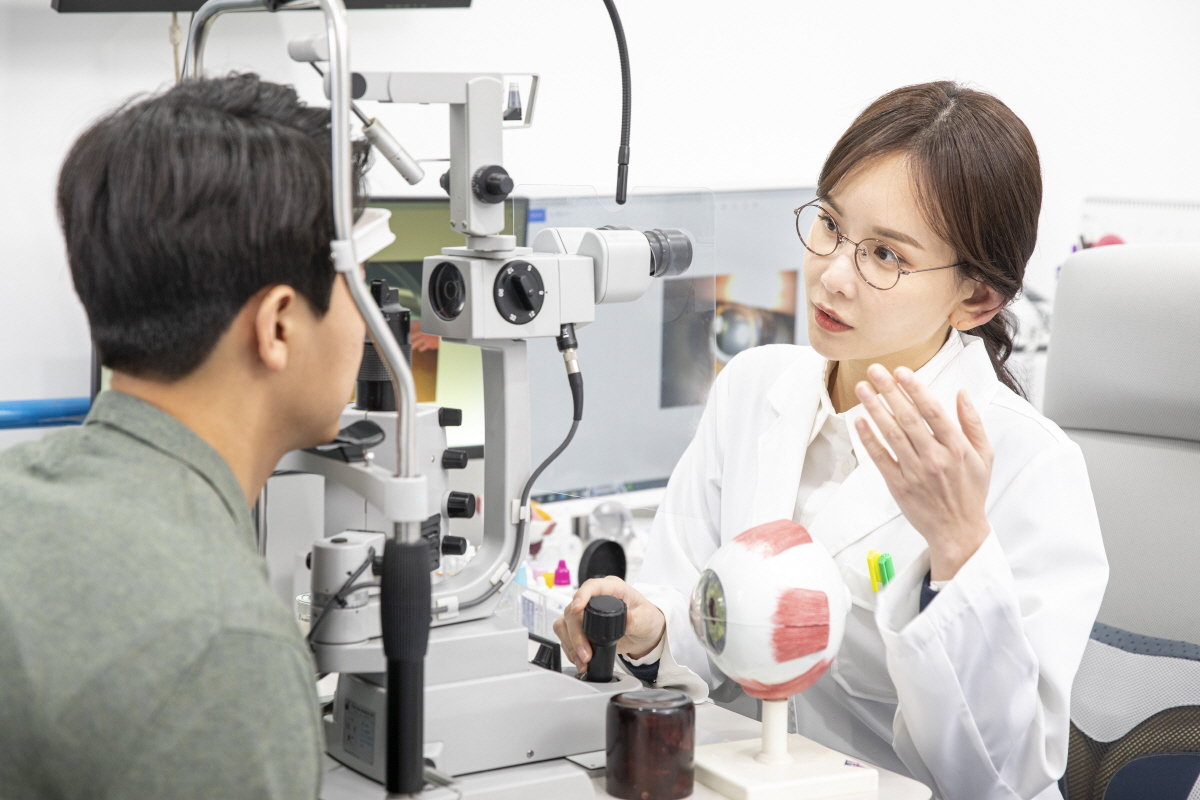
Korean Ophthalmology Recognized Worldwide ⓒClipartKorea
1. Strengths of Korean Ophthalmology
POINT 1. Experienced Surgeons and High Accessibility
Korean ophthalmology is trusted by international patients due to its highly experienced medical professionals with extensive experience in clinical trials and surgical expertise. The most commonly performed eye surgery in Korea is cataract surgery (with a total of 637,879 cases), boasting a high success rate of over 95%.1) In addition to LASIK and LASEK for vision correction, third-generation SMILE LASIK has also recorded a 99% success rate. Notably, SMILE LASIK has been performed over 10 million times worldwide, with more than 1.5 million procedures conducted in Korea alone. Due to the high demand for ophthalmic treatment, Korea has many skilled ophthalmologists, ensuring excellent medical accessibility.
1) National Health Insurance Service, 2023 Statistical Yearbook of Major Surgeries
POINT 2. An Affordable and Fast Medical System
ⓒBGN Eye Clinic Jamsil Lotte Tower
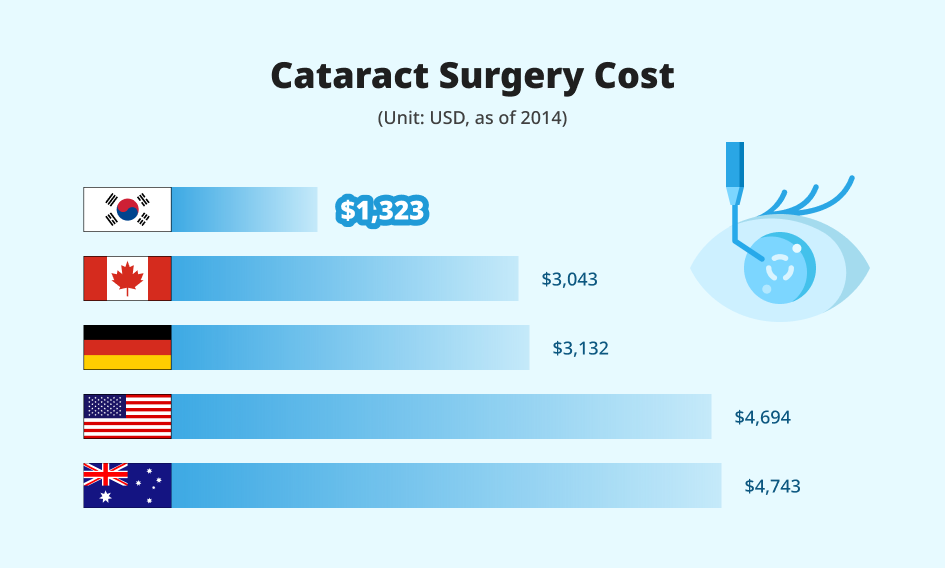
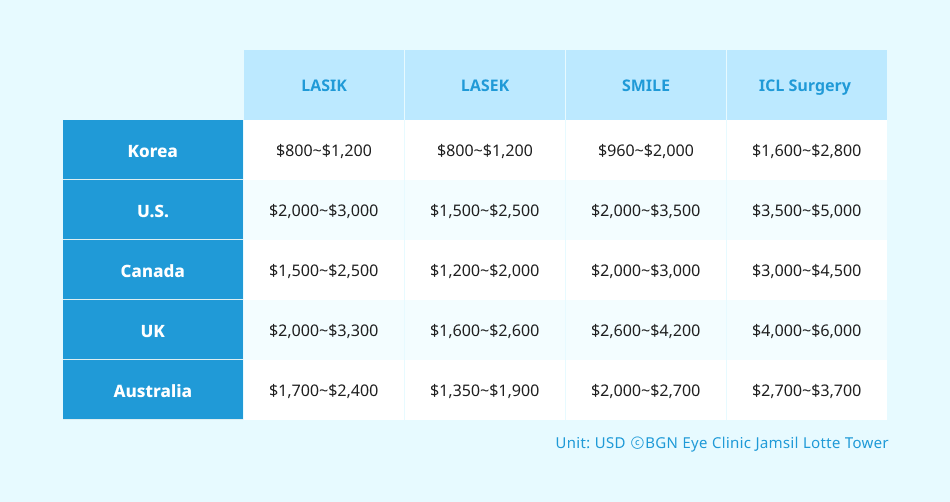
Korea’s healthcare system is known for its affordability and fast treatment process. When comparing surgical costs among major OECD countries, Korea’s cataract surgery cost is the lowest at approximately USD 1,329. In contrast, the cost in the United States is about 3.5 times higher at USD 4,694, while in Canada, it is about 2.2 times higher at USD 3,043. 1)Another advantage of Korean ophthalmology is the speed of the entire process, from consultation and examination to surgery. In particular, vision correction procedures and cataract surgery can often be performed on the same day. This is possible because hospitals are equipped with dedicated operating rooms and advanced specialized equipment, enabling immediate surgery following a doctor’s consultation.
1) Research Institute for Healthcare Policy, Korean Medical Association, 「Medical Price Levels of OECD Countries: A Comparative Study」, 2014
2. Top Two Most Notable Ophthalmic Surgeries in Korea
2-1. Vision Correction Surgery
According to the ‘2019 World Report on Vision,’ the first-ever global vision report published by the WHO, Korea has the highest prevalence of myopia. In fact, in 2022, the number of people with myopia reached 1,287,438. As a result, vision correction procedures such as LASIK and LASEK are highly advanced in Korea.
Category LASIK LASEK SMILE 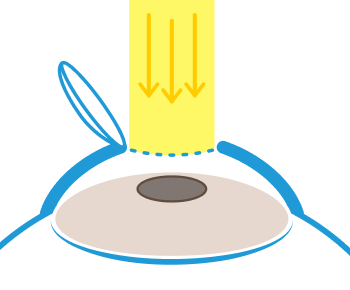
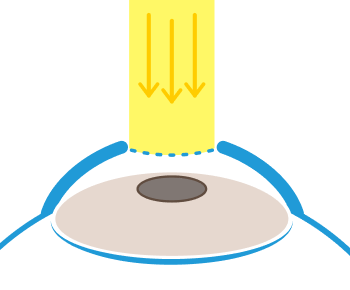
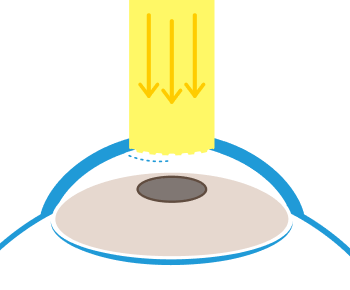
Characteristics Correction after creating a corneal flap (cap) Correction after removing the corneal epithelium Removal of corneal tissue (lenticule) after a minimal incision (2-4 mm) in the corneal surface Advantages - Minimal pain
- Fast recovery- Resistant to external impact
- Possible even for thin corneas- Minimal pain
- Fast recovery
- Lower risk of corneal haze and dry eyesDisadvantages - Vulnerable to external impact
- Impossible for thin corneas
- Risk of dry eyes- Longer recovery period
- Possible pain in some cases
- Risk of corneal haze- Requires high surgical expertise
- High costThe most common laser-based vision correction procedures are LASIK and LASEK. In LASIK, an approximately 20 mm corneal incision is made to create a flap (also called a cap), which is then lifted to expose the corneal stroma. A laser is applied to reshape the cornea, and after the correction, the flap is repositioned back in place. In contrast, LASEK corrects vision by removing only the epithelium without creating a corneal flap, after which a laser is applied to the exposed corneal stroma. Since LASIK does not remove the epithelium, it causes less discomfort for patients and allows for a shorter recovery period before returning to daily life. On the other hand, LASEK does not create a corneal flap, making it more resistant to external impacts. However, patients may experience some discomfort, and the surgical site takes approximately three to four days to heal. SMILE LASIK, which combines the advantages of LASIK and LASEK while minimizing their drawbacks, is gaining recognition as a next-generation vision correction procedure. It uses a femtosecond laser to precisely separate only the necessary amount of corneal stroma and removes it through a small incision, reducing the risk of corneal damage and allowing for faster recovery. This makes it a preferred choice among international patients visiting Korea. However, since the most suitable procedure may vary depending on the patient’s corneal condition, it is essential to consult with a specialist before choosing a surgical method.
2-2. Cataract Surgery
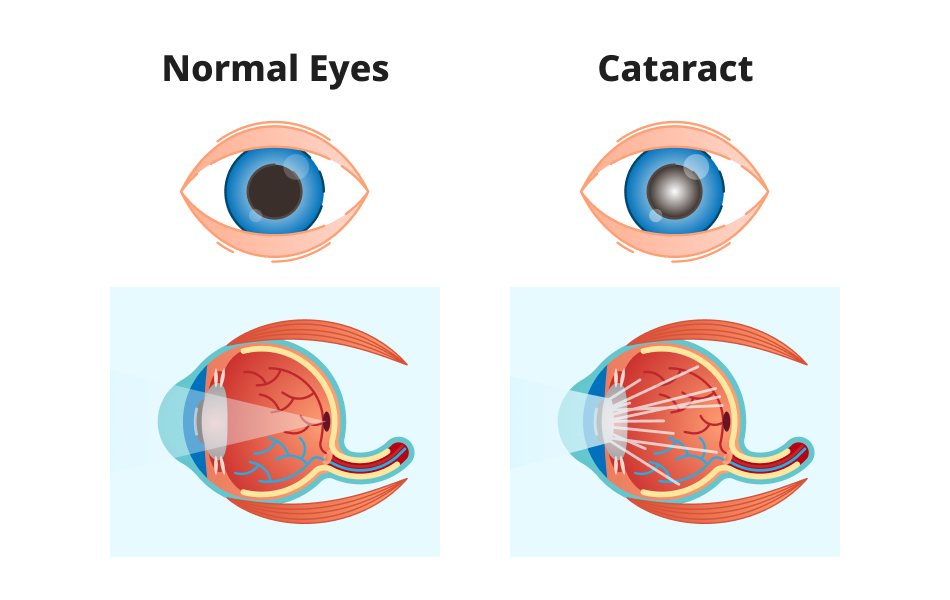
Cataracts are an eye disorder that causes the lens to become cloudy and opaque due to aging or other factors. In the past, they commonly developed in people over the age of 50, but in recent years, cases have been increasing among individuals in their 30s and 40s, as well as instances of early-onset cataracts in their 20s. Additionally, eye trauma, inflammation, or the use of steroid-based medications can also contribute to cataract development. In the early stages of cataracts, medication may be used for treatment. However, if symptoms worsen and interfere with daily life, surgery becomes necessary. Cataract surgery involves removing the clouded natural lens using a specialized microscope and phacoemulsification, after which it is replaced with a clear artificial lens.
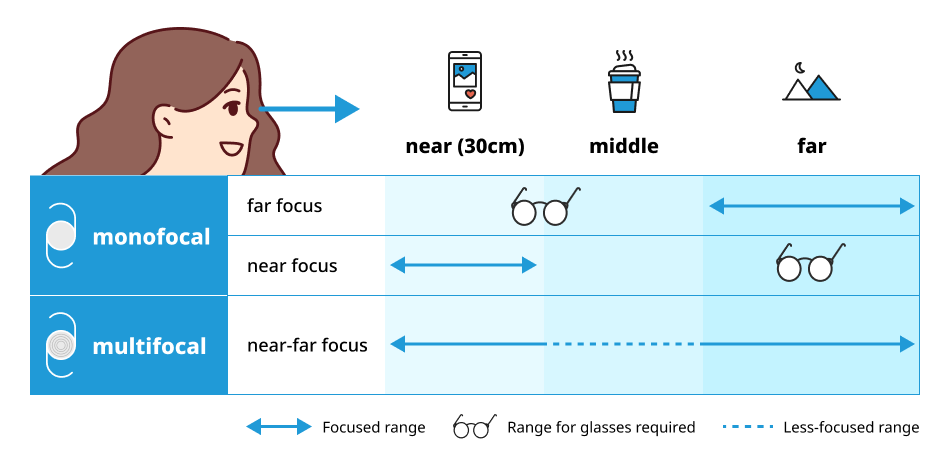
Lenses for intraocular use are categorized into monofocal lenses, which focus on either near or far distances, and multifocal lenses, which provide focus at all distances. Monofocal lenses offer high clarity with minimal light scattering, while multifocal lenses provide a broader range of vision. If a patient has both presbyopia and cataracts, a multifocal lens is recommended, as it can also correct presbyopia. Presbyopia correction using multifocal intraocular lenses is highly effective, with a patient satisfaction rate reaching 92%.1) Additionally, intraocular lenses can be used semi-permanently, as their vision correction effects are maintained unless vision deterioration occurs due to other ophthalmic conditions. However, patients with chronic or underlying diseases, such as hypertension or diabetes, may have an increased risk of visual impairment after cataract surgery. Therefore, it is essential to have a thorough consultation with a specialist and a comprehensive preoperative examination.
1) National Evidence-based healthcare Collaborating Agency (NECA), Project for the Reassessment of Medical Technology for Presbyopia Correction Surgery, 2021
3. Tips for Visiting an Eye Clinic in Korea
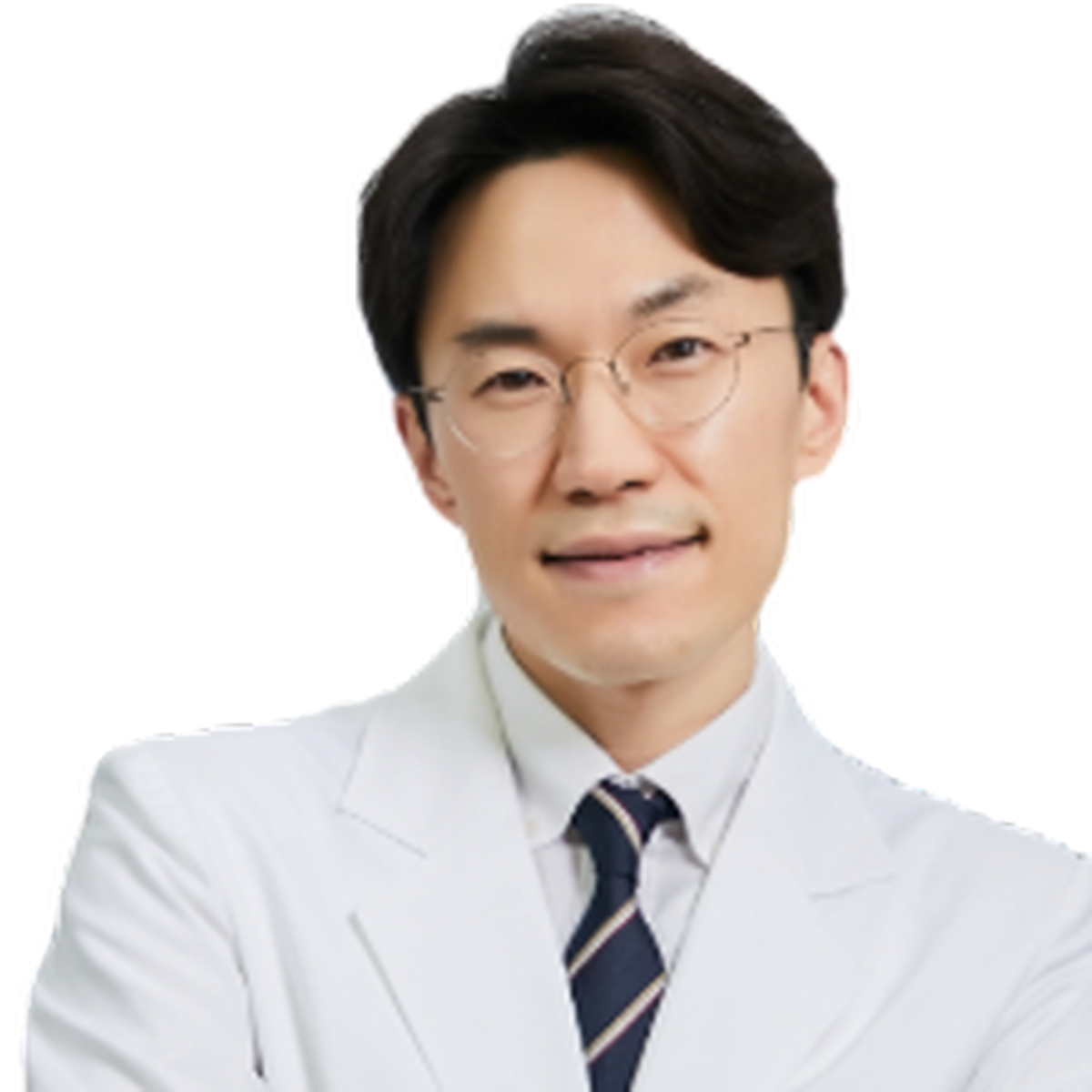
Prof. Hyun-jin Shin, Department of Ophthalmology, Konkuk University Medical Center

Dr. Myung-jun Kim, Director of Ophthalmology, HeaAneye Clinic
*This content is based on interviews with Prof. Hyun-jin Shin, Department of Ophthalmology, Konkuk University Medical Center, and Dr. Myung-jun Kim, Director of Ophthalmology, HeaAneye Clinic, in the order listed.

First, visit the website operated by the Korean Ophthalmologists Association. Using the ‘Find an Eye Clinic in My Area’ feature, you can search for nearby hospitals or locate clinics affiliated with the LASIK/LASEK Surgery Committee to help you choose a safe hospital for your procedure. Second, it is also important to check a hospital’s medical quality through its website. A precise diagnosis of the patient’s condition is essential for developing an appropriate surgical plan. The availability of high-precision diagnostic and surgical equipment can help determine the most suitable procedure and improve the surgery’s success rate. Finally, while a one-time surgery can be beneficial, regular visits to an eye clinic for check-ups are highly recommended. Routine eye exams help track changes in eye health and allow for early treatment if any conditions are detected.
Author Profile : CHOHEE CHOI, PD, Medical YouTube Channel “Aftertherain”

- 1330 Korea Travel Helpline: +82-2-1330
- 1330 Text Chat: https://m.site.naver.com/1rEid
- (Korean, English, Japanese, Chinese, Russian, Vietnamese, Thai, Indonesian)
- * This column was last updated in December 2024, and therefore information may differ from what is presented here.

-
1330 Helpline Call/Chat

Start a FREE Online Call(No charges for calls on Wi-Fi /
Data charges may apply)

Open 1330 Helpline Chat(Download not required)



 Medical Wellness